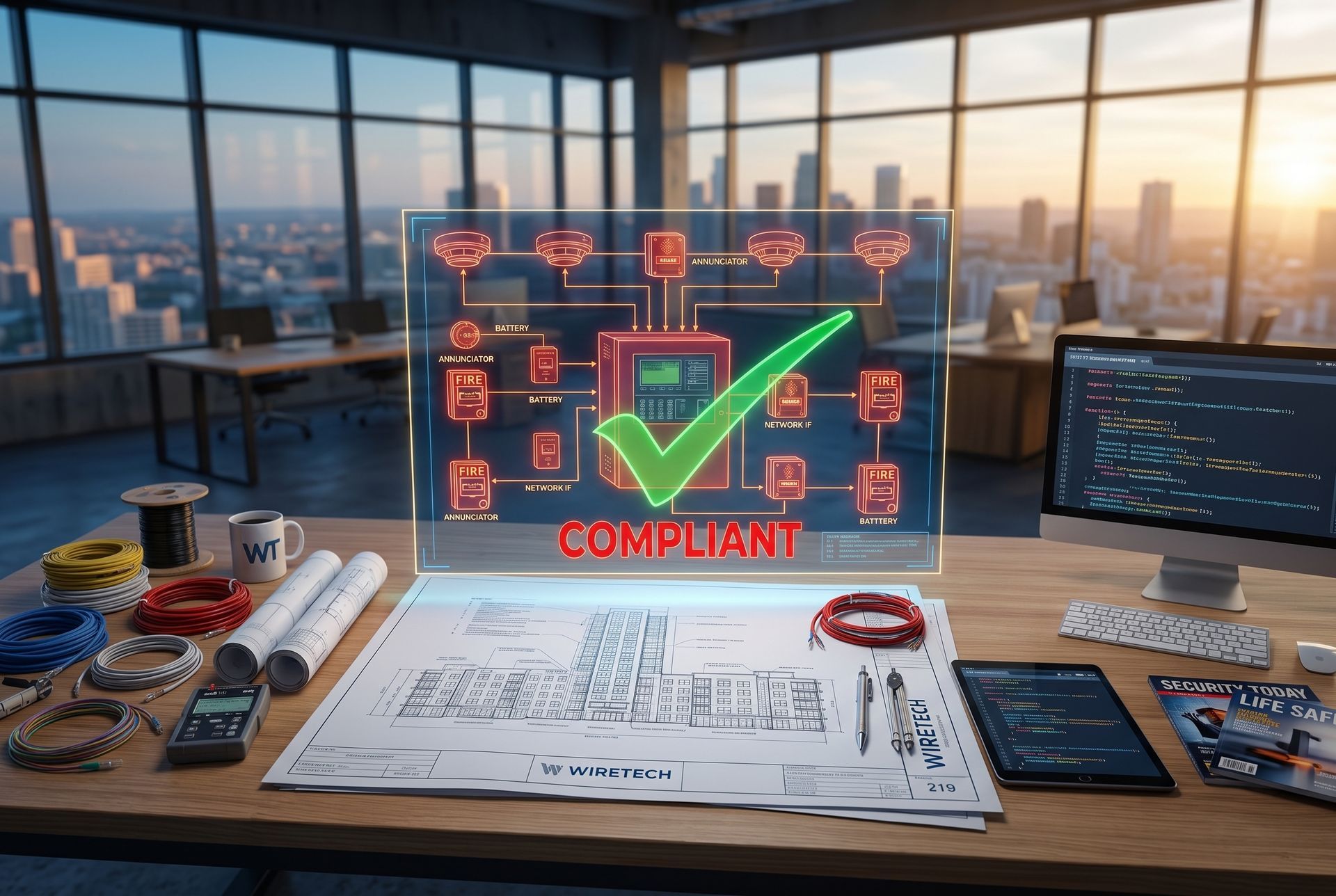
Low-voltage systems are no longer simple cabling installed at the end of a project. Today, they are interconnected systems that support security, connectivity, fire and life safety, and overall building performance.
When low-voltage planning is delayed, teams are often forced to make systems fit into a building that wasn’t designed to support them — creating avoidable rework, coordination challenges, and added cost.
Modern Buildings Require Intentional Technology Planning
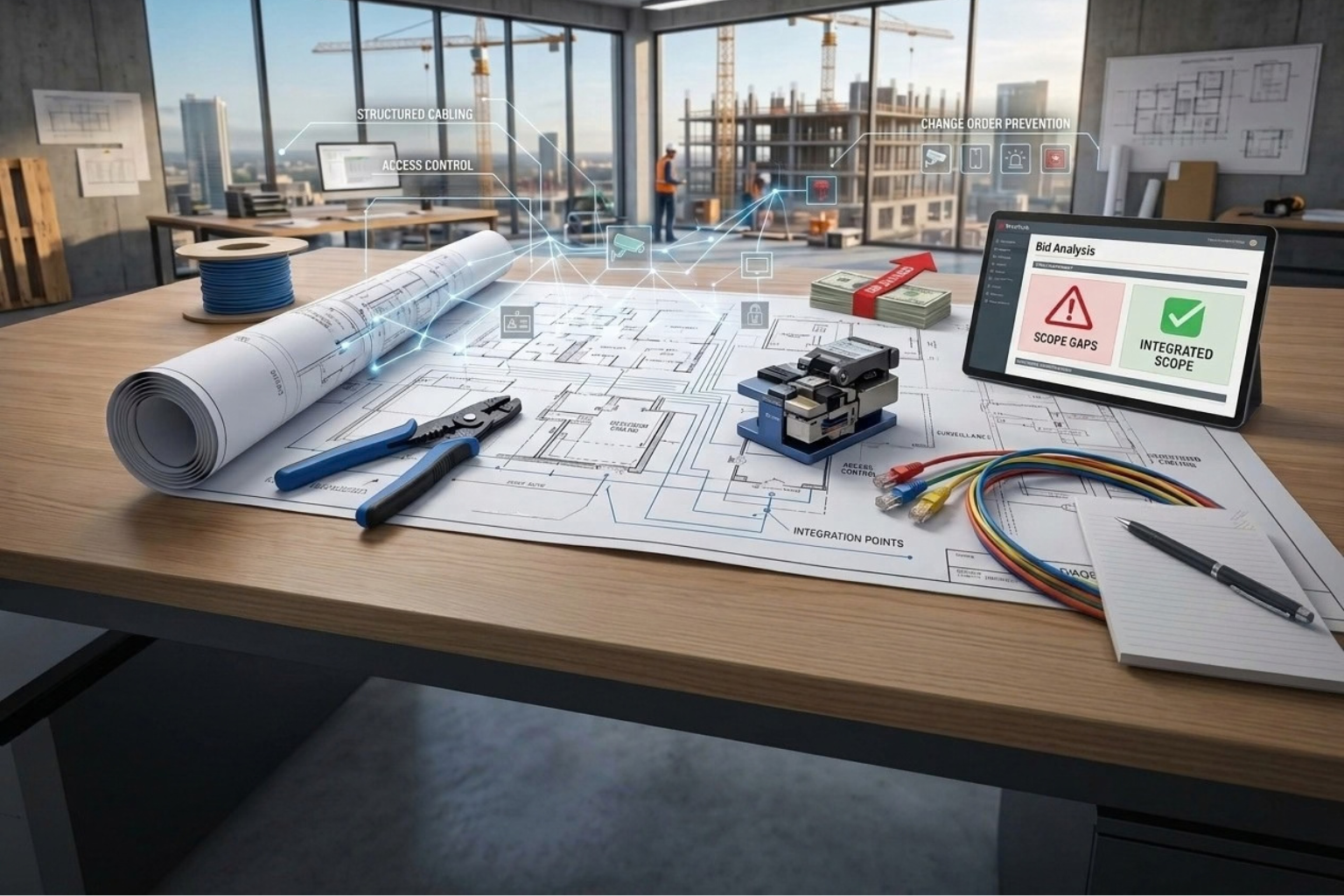
Access control, video surveillance, structured cabling, fiber, Wi-Fi, audio/visual, and other low-voltage systems depend on proper pathways, equipment space, power coordination, and integration with other trades.
Without early planning, these systems compete for space late in construction, increasing installation complexity and limiting long-term flexibility.
The Real Cost of Waiting
Delaying low-voltage design affects more than technology scopes. It impacts schedules, budgets, and trades already operating on tight timelines.
Last-minute adjustments can lead to congested pathways, design compromises, and rework that could have been avoided through earlier coordination.
Why Early Involvement Changes Outcomes
Bringing low-voltage expertise into the design phase allows technology infrastructure to be planned alongside the building itself.
WireTech works early with owners, developers, general contractors, electrical contractors, and design teams to identify infrastructure needs, coordinate across trades, and support systems that integrate cleanly into the overall build.
This approach reduces friction during construction and supports stronger system performance long after turnover.
Future-Ready Starts with the Right Foundation
Future-proofing is not about predicting every new technology. It is about creating infrastructure that can adapt.
When low-voltage systems are designed intentionally from the start, upgrades and expansions can be managed without disruptive rework — extending the value of the original investment.
Timing Is the Advantage
Low-voltage systems touch nearly every part of a modern building. Treating them as a late-stage task introduces unnecessary risk.
Early planning creates clarity, protects schedules, and supports systems that perform as intended.
The right time to think about low-voltage is before construction begins.
Connect with WireTech to bring low-voltage expertise into your project early and avoid costly rework later.
Work With WireTech